By Nicholas Field March 23, 2026
For a small business owner, the prospect of a free credit card terminal is very attractive. Running a business entails many expenses, and any offer that reduces costs is a very smart business decision. Payment service providers often use attractive marketing propositions, such as a free credit card terminal or no-cost POS equipment, as part of their business offers.
This sounds like a very attractive offer at first glance because it enables businesses to start processing payments without incurring equipment costs. However, nothing in life is free, and understanding what’s included in a free offer and what costs are likely to be incurred later is a vital consideration before making a business decision about your operations.
Table of Contents
What “Free” Really Means in Merchant Services

Free merchant services do not mean absolutely free. It only means that the cost is recovered in another way. Some merchant service providers offer a free terminal, but they recover this cost through processing fees. This is important for allowing new businesses to enter the market and start transacting.
However, it will cost them a lot in the future. Some providers will recover this cost through equipment costs in transaction pricing, and others will require a minimum monthly transaction volume. It is important to understand this pricing structure before making a choice. Free in this case does not mean absolutely free; it only means that they will recover it in another way.
Free Terminal vs Paid Terminal: What’s the Real Difference?
| Factor | Free Terminal Offer | Paid Terminal |
| Upfront Cost | No initial cost | One-time purchase cost |
| Processing Fees | Often higher than the recovery cost | Usually lower and more transparent |
| Contract Terms | Often long-term contracts | More flexibility |
| Ownership | The provider usually owns the device | The business owns the terminal |
| Hidden Fees | More likely (monthly, PCI, etc.) | Fewer unexpected charges |
| Flexibility | Limited switching options | Easier to switch providers |
| Long-Term Cost | Can be higher over time | More predictable overall cost |
| Control | Less control over the system | Full control over usage |
Processing Fees and Their Long-Term Impact
Processing fees are among the key factors to consider when evaluating a free terminal offer. Sometimes providers may charge higher processing fees to cover the cost of the equipment. Processing fees include interchange, network, and provider markup fees. A small percentage increase may mean a lot over time.
For business entities processing large transactions, they may end up paying far more than the terminal’s actual cost. It is essential to understand the fee structure so as not to be surprised later. Comparing various providers enables business owners to get fair pricing for their transactions. While business owners may focus on the actual cost savings, evaluating costs over time enables them to make better business decisions without compromising their profit margins.
Contracts and Commitment Risks
Many of these free terminal offers come with long-term contracts, and these contracts might not provide much flexibility for the business. Even though there is no need to pay for the terminal, there is a guarantee of getting back the money at a later point in time. If a business decides to change its provider at a later point in time, it might need to pay a huge amount of money as a penalty.
It is very important to understand the contract before signing it. Flexibility is always required, especially for a business that is expanding rapidly and might need more flexibility in the near future. The free terminal should not impose any restrictions on the business.
Leasing vs Free Terminal Offers
Terminal leasing can be seen as an alternative to free equipment, but in the end, leasing can be very expensive. Leasing a terminal can be very expensive in the end, as the cost of leasing can be very high. Most lease agreements are non-cancelable, meaning businesses will be forced to make payments even if they do not use the equipment.
Free terminal offers can be attractive, but businesses need to evaluate each option based on total cost over time. Businesses can determine the total cost of each option by calculating how much they will end up paying. By looking at leasing, buying, and free offers, businesses can make the best decisions for themselves. Making the best decisions can allow businesses to avoid unnecessary expenses.
Hidden Fees That Add Up Over Time
One of the major problems businesses face with free terminal offers is hidden fees. These are costs that are usually included in free terminal offers and can greatly impact the total cost of the deal. These costs include monthly service fees, PCI compliance fees, statement fees, batch fees, and maintenance fees.
These costs may be small individually, but when accumulated over time, they can greatly impact the business’s bottom line. Some providers do not make these costs clear from the beginning. Businesses should thus ask detailed questions before entering into any deal. Businesses can request detailed pricing structures from providers to help identify all costs involved. Transparency is thus very important in any deal, including payment solutions.
Ownership and Equipment Control
Another factor to consider in free terminal programs is ownership of the terminal. In most free terminal programs, the terminal provider retains ownership of the equipment. This implies that businesses may be required to return the equipment if they switch providers.
There may also be penalties in such cases. Having the equipment owned by the businesses gives them flexibility and independence. Businesses can switch providers without losing the equipment.
Performance and Reliability of Free Devices
However, the quality of free credit card terminals varies significantly among providers. Some provide modern, efficient equipment, while others provide outdated, basic equipment. This directly affects transaction speed and overall efficiency throughout the day. It is therefore essential for a business to consider the equipment’s specifications before accepting a free credit card terminal offer.
In addition, some terminals may not be compatible with contactless payments, mobile wallets, and software systems. It is also important to note that a credit card terminal is constantly in use during the day, and therefore, its reliability is more important than the cost savings. Investing in efficient equipment ensures a better customer experience on every transaction throughout the day.
Integration with POS and Business Systems
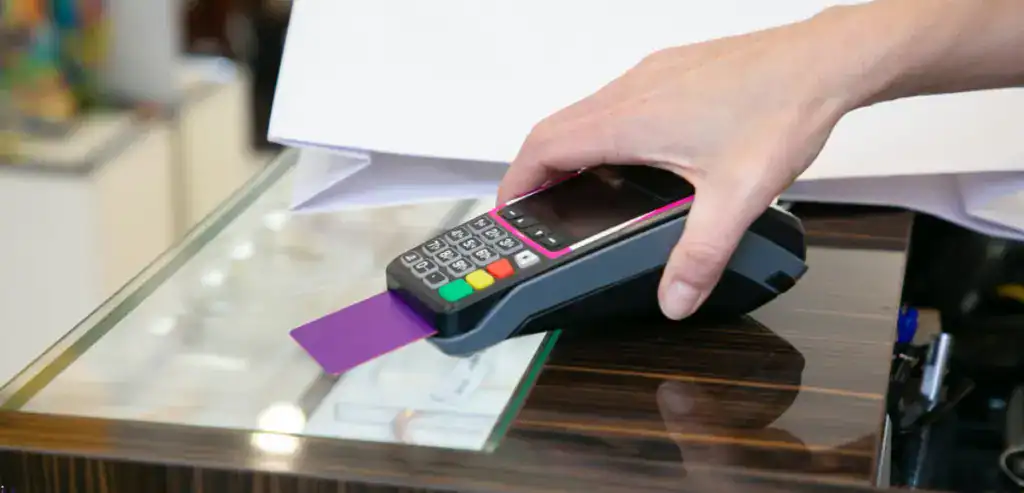
A credit card terminal should seamlessly integrate with existing POS systems, inventory management, and accounting software. This is important as poor integration will lead to inefficiencies, such as manual entries, that will affect the smooth flow of operations. When there is integration, there is no need for manual entries, hence ensuring smooth operations.
When a business uses a free credit card terminal, it is essential to determine whether it is compatible with existing operations. This is important, as a non-integrated credit card terminal creates complexity, whereas a well-integrated one creates ease of operation. This will help with decision-making and increase productivity, as no complexity will be added to operations.
Transparency and Provider Trust
When selecting a payment provider, trust and transparency are essential. A business should look for a payment provider that is transparent in its charges and conditions. A transparent payment provider will help a business build trust. A payment provider should be able to give detailed information about their charges and conditions. A lack of transparency in a payment provider is a recipe for disaster.
A business should look for a payment provider that it can trust. A trustworthy payment provider is essential for a smooth-running business. Transparency is a sign of a professional and trustworthy payment provider. When a business is fully aware of the value it is getting for its money, it is in a position to make informed decisions. A business should look for a transparent payment provider. A transparent payment provider is essential for a stable and predictable payment processing experience.
Comparing Offers Carefully
Comparing multiple payment provider offers is essential before choosing a free credit card terminal. Each provider structures pricing differently, and small differences can lead to high long-term costs. Businesses should review processing rates, monthly fees, contract terms, and included features side by side. It is important to look beyond marketing claims and focus on actual numbers.
Requesting a full pricing breakdown helps identify hidden costs. Comparing also highlights differences in support, equipment quality, and integration capabilities. A structured evaluation ensures that decisions are based on value rather than perception. Taking time to compare offers carefully reduces the risk of choosing an option that appears free initially but becomes expensive over time.
Free Credit Card Terminal Evaluation Checklist
Before you accept the “free” terminal offer, it is useful to go through a short checklist to ensure you are not hit with hidden costs later.
- Processing fees (are they higher than the average?)
- Length of the contract
- Ask about early termination fees
- Identify all hidden charges (PCI, monthly, statement fees)
- Do you own the terminal when you are finished with it?
- How fast is the terminal?
- Does the terminal accept contactless payments?
- Does the terminal accept mobile payments?
- Is the terminal integrated into your existing system?
- Does the terminal scale up well for future business needs?
- Does the terminal provider give you a full cost breakdown?
By going through the checklist above, many merchants have avoided hidden costs later.
Negotiating Better Terms
Most business owners assume the terms of payment are set in stone. However, negotiation is possible. Providers may be willing to lower rates, waive some fees, or offer better contract terms, depending on the volume of business. It is important to ask questions.
Negotiation is not about being aggressive. It is about being aware of the value. It is about being fair. Business owners should be aware of processing fees, monthly fees, and contract terms. It is important to be prepared. When business owners are confident when talking to providers, they can get the best deal.
Making the Right Decision
However, business owners need to make a decision based on factors such as cost, performance, and flexibility. Getting a free credit card terminal is a choice business owners might make, but it is important to consider whether it will be beneficial in the future. Business owners should consider how it will affect their business, including performance and convenience. Business owners need to consider whether they will gain from making a choice based on saving money in the future.

Conclusion
Free credit card terminals can offer value, but only when the business is aware of the terms under which the offer is provided. The offer of something for free is often associated with hidden costs. Business owners must be aware of the total cost of the offer.
A well-informed decision requires the business owner to understand the pricing structure of the offer. Payment systems are operational tools for the business. They are not meant for short-term use. A well-thought-out decision on the payment system is essential to the business’s long-term success. Business owners must be willing to look beyond the word “free” to make the best decisions for the business.
FAQs
Do free credit card terminals actually exist?
Not totally. Higher processing fees, contracts, or other charges are typically used to recover costs.
What should I look for before agreeing to a free terminal?
Examine contract terms, processing rates, hidden expenditures, and overall long-term expenses.
Is purchasing a terminal preferable to receiving one for free?
Yes, occasionally. If processing fees decrease over time, purchasing up front may be more affordable.
After accepting a free terminal, can I switch providers?
Certain agreements have limitations or termination fees.
Do free terminals impact the customer’s experience?
Performance should always be assessed first because it can be, particularly if the device is slow or out-of-date.